

The construction industry is undergoing a structural transformation driven by modular construction, prefabricated building systems, and the integration of digital design. These shifts are reshaping how buildings are designed, manufactured, and assembled. As a result, light steel framing technology has become a critical component in modern construction projects because it enables faster structural assembly, improved precision, and reduced labor requirements.
However, the growing adoption of light steel framing has also increased the demand for high-performance manufacturing equipment capable of producing structural components efficiently and consistently. Construction companies, prefabrication factories, and structural manufacturers now face a crucial decision: selecting the right machine voor lichte staalconstructies that can support large-scale production while maintaining the engineering precision required for modern building systems.
Choosing a high-efficiency machine is not simply a matter of comparing production speeds or machine sizes. Modern framing machines are complex manufacturing systems that integrate digital design software, automated forming technology, and precision control systems. Their performance directly affects production capacity, structural accuracy, operational costs, and the overall success of construction projects.
Why Machine Selection Has Become a Strategic Decision in Modern Construction
In traditional construction environments, structural components were often fabricated manually or through small-scale equipment. However, modern building methods—especially modular construction and prefabricated steel structures—require a far more efficient and precise manufacturing process.
Project timelines are shorter, labor availability is increasingly limited, and building designs are becoming more complex. These factors mean that structural manufacturing equipment must operate with higher productivity and reliability than ever before.
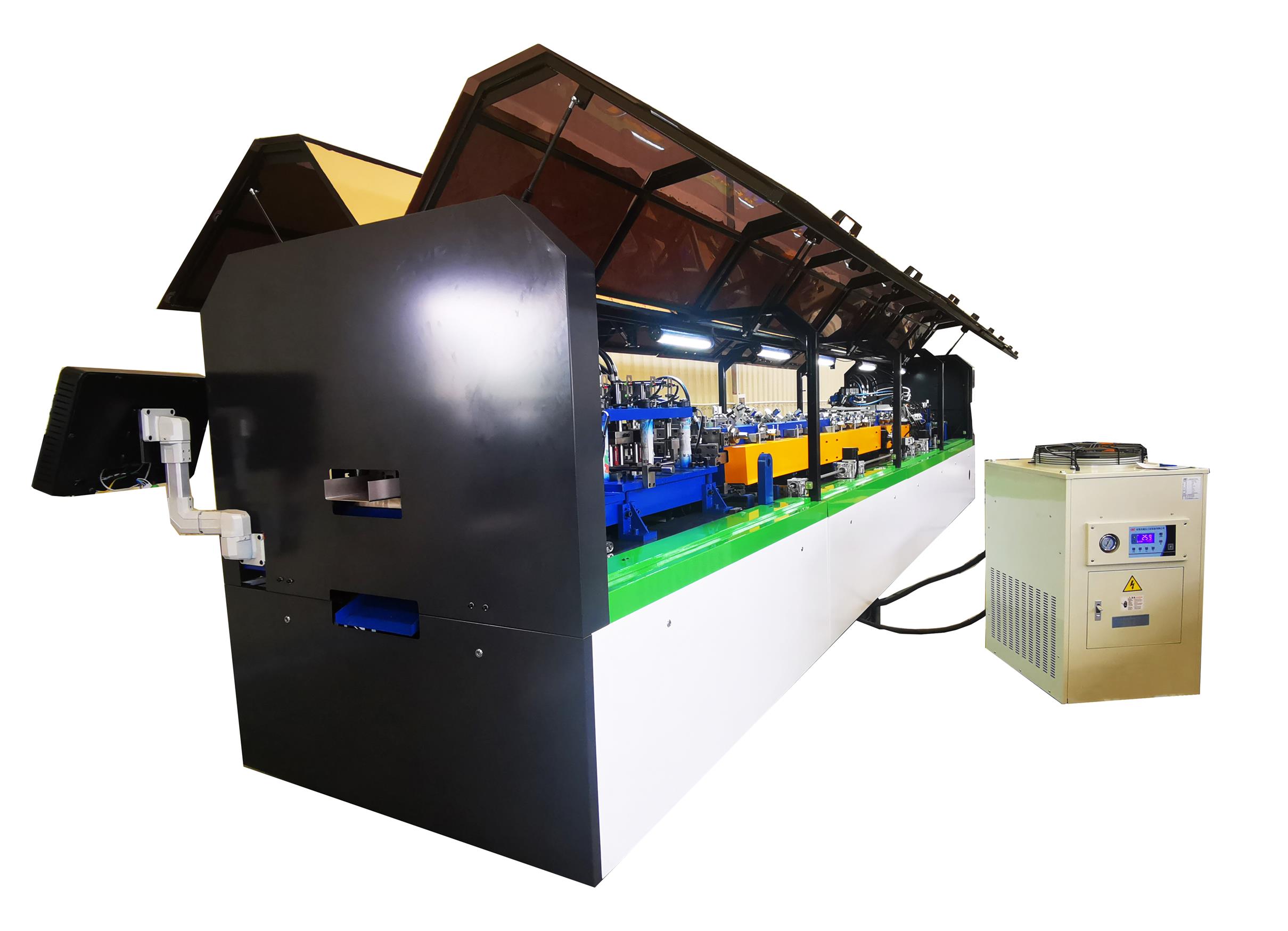
Light steel framing machines now function as the core production systems within many prefabrication facilities. They transform digital design data directly into physical steel components, allowing entire wall systems, floor structures, and roof trusses to be manufactured before arriving at the construction site.
Because of this shift, the selection of a steel framing machine has become a strategic investment rather than a simple equipment purchase. The right machine can significantly improve production capacity and reduce construction timelines, while the wrong equipment can create bottlenecks that delay entire projects.
For companies involved in large-scale residential developments, modular housing production, or commercial prefabrication projects, machine performance directly determines how efficiently they can deliver completed structures to the market.
Production Throughput: Evaluating Real Manufacturing Efficiency
Production speed is often the first specification buyers examine when comparing steel framing machines. However, nominal roll forming speed alone does not accurately represent the real productivity of the equipment. True manufacturing efficiency depends on several operational factors, including punching operations, cutting cycles, automation levels, and production stability.
A machine capable of forming steel profiles at high speed may still deliver lower overall output if punching and cutting operations slow down the production line. Likewise, inconsistent material feeding or manual adjustments can significantly reduce actual throughput.
When evaluating equipment, construction companies should focus on the combined performance of the entire manufacturing process rather than a single speed indicator. The relationship between forming speed and total production output is particularly important for projects that require large quantities of framing components.
The following comparison illustrates how production efficiency can vary between standard machines and high-efficiency steel framing systems:
| Production Metric | Standard Steel Framing Machine | High-Efficiency Framing Machine |
|---|---|---|
| Roll Forming Speed | 20–30 m/min | Up to 48 m/min |
| Drywall Panel Output | 400–500 m/h | Up to 750 m/h |
| Roof Truss & Floor Joist Output | 300–400 m/h | Up to 550 m/h |
This comparison highlights that high-performance machines are capable of delivering substantially higher production capacity under continuous operation. For construction companies handling large housing developments or modular building projects, this difference can translate into significant reductions in project timelines.
Production throughput also affects labor allocation. When machines operate efficiently, fewer operators are required to supervise manufacturing, which helps companies manage rising labor costs and improve overall production efficiency.

Software Integration: The Core of Intelligent Steel Framing Production
One of the most important developments in steel framing manufacturing is the integration of digital design software directly into production equipment. Modern framing machines no longer function as simple roll-forming tools; they operate as digital manufacturing platforms that convert architectural design data into finished structural components.
This integration allows construction companies to establish a seamless workflow between building design and production. Design software such as Vertex BD can generate precise structural models of buildings, including walls, roof trusses, and floor systems. These models contain detailed information about every steel component required in the structure.
When connected to the framing machine, this data can be automatically converted into manufacturing instructions. The machine receives information about profile dimensions, punching locations, cutting lengths, and component sequencing. This eliminates manual data entry and reduces the risk of production errors.
Digital integration also provides additional operational benefits. Material requirements can be calculated automatically, reducing waste and improving inventory management. Production schedules can be optimized based on project timelines, allowing manufacturers to plan their workflow more efficiently.
As construction companies increasingly adopt Building Information Modeling (BIM) and other digital design tools, the ability of steel framing machines to integrate with these systems becomes a critical selection factor.
Precision Engineering and Structural Accuracy
Structural accuracy is essential in modern steel framing systems. When prefabricated components are manufactured off-site, they must fit together precisely during on-site assembly. Even small dimensional deviations can create installation problems, requiring costly adjustments during construction.
High-efficiency steel framing machines use advanced servo-driven control systems to maintain strict dimensional tolerances throughout the manufacturing process. Automated gauge adjustments ensure that profile thickness and forming pressure remain consistent, while precision punching and cutting systems produce components with exact dimensions.
The following table illustrates the typical differences between standard equipment and high-precision framing machines:
| Precision Parameter | Standard Machine | High-Precision Machine |
|---|---|---|
| Punching Accuracy | ±1 mm | ±0.5 mm |
| Cutting Accuracy | ±1 mm | ±0.75 mm |
| Aanpassing van de meter | Semi-automatic | Fully automatic servo control |
Higher precision improves installation efficiency on construction sites because structural components align correctly during assembly. This reduces the need for manual corrections and allows prefabricated building elements to be installed more quickly.
For modular construction projects where large wall sections are assembled in factories before transportation, maintaining strict dimensional accuracy is particularly important.
Material Compatibility and Structural Strength Requirements
Another critical consideration when selecting a steel framing machine is its ability to process materials that meet modern structural requirements. Light steel framing systems typically use galvanized steel sheets with high tensile strength to ensure durability and structural integrity.
Machines designed for advanced construction applications must accommodate materials with tensile strengths of up to 550 MPa while maintaining stable forming performance. They should also support a practical range of material thicknesses suitable for different structural components.
Most high-performance framing machines are designed to process galvanized steel sheets within the thickness range of 0.75 mm to 1.2 mm. This range allows manufacturers to produce components suitable for a wide variety of construction applications, including interior partition systems, exterior wall framing, roof trusses, and floor joists.
Material compatibility also affects the durability of the machine itself. High-strength steel can place greater stress on forming rollers and punching tools. As a result, machines designed for modern construction projects must incorporate durable components capable of maintaining performance under continuous operation.
Profile Flexibility and Customization Capabilities
Modern construction projects often involve diverse structural requirements. Residential buildings, commercial spaces, and renovation projects may all require steel framing components with different dimensions and configurations.
High-efficiency steel framing machines, therefore, need to provide flexible profile production capabilities. Instead of being limited to a single profile design, advanced machines can produce multiple C-shaped steel structures with adjustable dimensions.
Typical examples include profiles such as:
-
89 × 41 × 10 mm structural framing components
-
140 × 41 × 10 mm load-bearing steel profiles
-
Customizable lip sizes and strip widths depending on project requirements
The ability to adjust production parameters allows manufacturers to respond quickly to new project specifications without changing equipment. This flexibility is particularly valuable for companies that handle multiple construction projects simultaneously.
Automation and Labor Efficiency in Steel Frame Manufacturing
Automation plays a central role in improving the productivity of steel framing operations. Modern machines integrate multiple automated functions that reduce manual intervention and ensure consistent manufacturing performance.
A highly automated steel framing machine typically provides several operational advantages:
-
Automated data processing that converts design files into production instructions
-
Continuous roll forming operations that maintain a stable production speed
-
Automatic punching and cutting that ensures consistent component accuracy
-
Real-time monitoring systems that allow operators to supervise production efficiently
These capabilities allow a small number of operators to oversee large production volumes, significantly improving labor efficiency.
Automation also reduces the likelihood of human error during manufacturing. Because production instructions are generated directly from design software, there is less risk of incorrect measurements or misplaced punching operations.
Equipment Reliability and Maintenance Considerations
Steel framing machines often operate continuously in prefabrication facilities where large quantities of structural components must be produced every day. As a result, reliability and maintenance requirements are important factors when evaluating equipment.
Machines designed for long-term industrial operation typically incorporate high-quality components such as advanced hydraulic systems, durable forming rollers, and reliable programmable logic controllers (PLCs). These components ensure stable machine performance even under demanding production schedules.
Maintenance accessibility is another important design consideration. Equipment with a compact layout and easily accessible components allows operators to perform inspections and routine servicing more efficiently. This reduces downtime and helps maintain consistent production output.
In addition, machines equipped with widely recognized control systems and hydraulic components can simplify maintenance because spare parts are easier to obtain.
Environmental Efficiency and Sustainable Construction Manufacturing
Sustainability has become an increasingly important consideration in the construction industry. Governments, developers, and contractors are adopting building methods that reduce environmental impact while improving resource efficiency.
Light steel framing technology supports these goals because steel is highly recyclable, and structural components can be manufactured with minimal material waste. Automated framing machines further enhance this advantage by optimizing material usage during production.
Efficient manufacturing systems reduce excess scrap, improve energy utilization, and minimize emissions associated with material processing. This aligns with the growing emphasis on green building practices and sustainable construction technologies.
As prefabricated construction becomes more widespread, environmentally efficient manufacturing equipment will play a central role in supporting sustainable building development.
Key Factors to Prioritize When Selecting Steel Framing Machines
For construction companies investing in steel framing equipment, several core factors should guide the decision-making process:
-
Production efficiency and throughput capacity to support large-scale building projects
-
Software integration capabilities that enable seamless design-to-production workflows
-
Structural precision and material compatibility for accurate prefabricated components
-
Reliability and maintenance efficiency for long-term industrial operation
Machines that successfully combine these attributes can significantly enhance the productivity and competitiveness of construction companies operating in modern prefabricated building markets.
As construction methods evolve toward prefabrication, modular design, and digital project management, steel framing machines have become essential manufacturing tools for modern building systems. Selecting the right equipment requires careful evaluation of production efficiency, software integration, structural precision, and operational reliability.
High-efficiency light steel framing machines enable construction companies to transform digital building designs into precise structural components quickly and consistently. By increasing production capacity and reducing manual labor requirements, these machines enable faster project completion and more efficient construction processes.
Companies that invest in advanced framing technology position themselves to meet the growing demand for modern construction solutions while maintaining the flexibility needed to adapt to future industry developments.
